
Sins committed in ignorance
Ignorance is itself a sin and result thereof is borne accordingly. If we study Vedas then we will find in 31 chapter of Yajurveda and mandal 10 of Rig Veda that God creates universe and simultaneously He originates the knowledge of four Vedas in the hearts of four Rishis of unsexual creation. Yog shastra sutra 1/26 clarifies that God is thus the first Guru of four Rishis and thereafter the Rishi Munis who knows Vedas and are Yogi like Vashisth Muni, Vyas Muni and Kapil Muni etc., have been our Gurus.
Definition of Om
OM has three Hindi words. Aa,Uu and Ma. Aa is meant for Aakaar from which three names of God are built, Viraat, Agni and Vishwadi. From Uu= uukaar from which Hirnyagarbh, Vaayu and tejas names occurs and Ma = makaar from which Ishwar, Aditya and Praajyan aadi, holy...
Difference between Buddhi, Mann and Aatma
To understand the answer of the question a deep study of Rig Ved mandal 10 sukta 129 is essential. But is short one should understand about alive and non-alive matters. There are three matters in the universe. Almighty God and souls are alive. And prakriti is non-alive. It is stated in the said Rig Veda mantra 1 that when the previous universe had been destroyed and new one did not create then there was nothing to see. God, souls and prakriti was there, but in unseen stage. The sun, moon, sky, air, water, life, bodies of human beings, animals or birds, i.e., whole universe, was not there.
Adwaitvad – questions and answers – June 24, 2004
Ram Suri previous reply: The ‘Amanava purusha’ described in Chandogya Upanishad 5.10.2 guides the soul to god (‘maasebya samvatsaram ….vidyu tam tatpurusho amanavaha sa yena brahma gamayatyasha devayanah pandah iti’). The meaning of this is that the soul travels from months to the year, from year to sun, from sun to moon, and from moon to lightening. Then from the region of Brahman, a non-human person, created from mind (for creation from mind, please see Br. Up. 6.2.15 – tatpurusho manas yetya brahma lokaa.) comes and guides the soul to Brahma lok. Sir! I humbly request you to read this particular reference and reply me. So that we both can start our discussion from that point onwards. Also please see, Chh. Up. 4.15.5 for the same description. Also, I request you too look Br. Up 6.2.15 for the same description. I, once again request you to give very specific and clear replies. This will also help to all people.
Swami Ram Swarup: Reply is given below please.
Previous Ans from Swamiji: In this connection I have mentioned the meaning of Archi above.
Ram Suri present reply: I am not asking the meaning of Archi please. I know its meaning. It gives me an impression that now you are trying to evade the discussion by not giving concrete answer to this question. I am sure that you did not look the references I quoted from Br. Up. and Ch. Up above. After reaching the moon, the soul goes to lightening. From here, the topic of amanav purush comes into the picture, as per Br. Up. 6.2.15 – tatpurusho manas yetya brahma lokaa). You can also find the same topic in Chh. Up. 5.10.2.
Swami Ram Swarup: Your views are not acceptable please. You and I or anybody is free always to quote words or meaning or anything but it does not mean that I am forcing youbto accept an do not know the meaning. This archi word, I have explained again below. You may send unlimited questions this is your right and my right is to reply as per my views. So your above views are not understood please. Please make the atmosphere sweet and calm.
Ram Suri: Now, let us see the following: Who is this person referred in the above two quotes? He is the amanav purush. Right? Where was he said to have come from in the above references? He came from Brahma Lok. Right? (Please see Br. Up. 6.2.15 – tatpurusho manas yetya brahma lokaa). Please do not say that this Brahma Lok is nothing but the physical body like that. The physical body is already dead, and thus the soul is traveling on devyan marg, and taken to Brahma Lok. That means this Brahma Lok is not representing the physical body now. Right? Where will this amanav purush lead this soul to? He will lead this soul to Brahma Lok (Please see ‘yena brahma gamayati’Chh. Up. 5.10.2). Right? Please do not skip this discussion by saying that this soul does not need any assistance or like that. I am not saying that this soul requires assistance. The above references from Br. Upanishad and Chh. Upanishads are saying that. Right? Also please do not say here that Vedas donot say this or do not say that or it is against to Vedas like that. You have said previously that you have studied only 11 Upanishads (IsH, KEN, KATH, PRASHAN, MUNDAK, MANDUKYA, ETRAIYA, TETRIYE, CHHANDOGYA, BRIHIDARNAYAK AND SWETASHWTAR), which are based on Vedas. If you do not believe this, please refer your answers, posted to me on March 11, 2004. In this posting, you have given this answer. Since, my above two quotes are from Chh. Up. and Bri. Up., now you cannot say that the above references are against Vedas. Now, my question for you is that who is this Brahman to whom the amanav purush has taken this soul to? Please answer to this question. From now on, this discussion will be much more interesting for all of us. Therefore, let us confine to this topic and please answer your response soon.
Swami Ram Swarup: As I have quoted above now, you and I can not suppress anybody else to make control of use toexpress. Please don’t force me saying about Vedas etc. I also can not force you to express anything. I will say whatever I want and you will say whatever you want and I have regard on your questions but I will not say you to have regard on my answer but would request you not to force me to tell this and that as told above. Hope please you will not mind. Because wehave to maintain love and brotherhood at all level otherwise discussion will be over. Please excuse me if I have hurt your heart. But my request is simple and must not hurt your heart. My blessings and namaste to you.
Brihadarnyak Upnishad says in second Brahmin Shwetketu son of an Acharya reached a king of Panchal country, king Pravahann put question to shwetketu if he knows that after death where the soul goes and how again comes to this lok and what is Pitriyaan and Devyaan marg. Based on vedic philosophy the king is teaching Acharya Gautam that the learned person whoknows Vedas and knos the science of five fires or the sanyasi who has left home and ha sgone to jungle in a lonely place to worship God with trust (shradha), they both attain first the stage of Archi. Here archi means “AHAN = AHANIK” i.e., the stage of merriment. But the worldly meaning of archi is light. So first to be a learned of Vedas and knower of five fires or a sanyasi who lives in a dense jungle and does worship with trust, is necessary. The meaning of “shradha = shrat+dha iti shradha ” shrat means truth i.e., Almighty and formless God and none else. Such like souls go to Devlok as I have already quoted the Yajurveda chapter 39.Then a manomaye Purush carries such souls to brahmlok. But the meaning of manomaye Purush is the utmost and unlimited realization of merriment (Brahmanand) and this stage makes sure for such souls to realize God. Such souls then remain in brahmlok i.e., attains moksh.
In Chhandogya Upnishad 5/10/2 all has been said according to the 39th chapter of Yajurveda which I have already explained before. Then the upnishad say that the soul of leartned is having the result of unlimited auspicious/pious deeds andstating the world TAT PURUSHAHA AMANAVAH here the amanav means, based on the unlimited rtesult of pious deeds, such souls attain Brahm i.e., immersed in Braham and this is called Devyaan marg; that the soul has attained the God/immersed in Anand, gyan and Jyotiswarup Brahm. But the soul has not become Brahm. This happens like a swimmer who dives in the water infull for sometime and then again comes out. Chhandogya Upnishad 5/10/1,2 says, “ARCHISM ABHI SAMBHAVNTI” i.e., such souls divert towards Archism i.e., jyoti (light) i.e., they become like jyotiswarup. So such learned souls are themselves archi and amanav. Here learnes souls means the soul of a Yogi- Rishi or Muni who has attained Brahm and has got moksh such i.e.,merriment of salvation. Amanav means he who is lack of proud and is humble. In this connection Sankhya shastra sutra 3/78 to 82 which I have quoted before also states that the learned soul while living in body become jeevanmukt. Because if he is not alive then who will give the real knowledge to the aspirants. Otherwise sutra 3/81 says that there will be a tradition of blind faith.
Chhandogya Upnishad 4/15/5 says such learned soul who has attained salvation, when dies then whether his cremation wherte the dead body met with fire are performed or not is immaterial because his soul has attained salvation or eternal jyoti. Thereason is that when his body is burnt then his body is put into fire and such cremation is not done then yet the soul of learned has already attain salvation and jyoti (light). Because funeral is meant for body and not for soul. First his soul becomes archi i.e., ray of light then the light increases like day light then light increases land becomes like a light of Puranmasi (jyoti), it increases further light becomes of six months then years and then becomes like Aditya i.e.,the soul’s light seems to be light equivalent to Aditya (sun). Then from Aditya jyoti to chandra jyoti and chandra jyoti to vidyut jyoti and this process the soul of manav itself becomes a manav. Now please send your comments.
I have given this reply based on Vedas and upnishads comments by Vidya Martand Dr. Satyavrat Sidhantalankaar Ex. M.P. and vice chancellor, Gurkul Kangri University. If you can study, please study these Upnishads, if not then it is okay because it is not compulsion. The eternal knowledge are four Vedas and 11 upnishads quoted by you above also have been written by those Rishis and even Bhagwat Geeta, who were the philosopher of four Vedas and ashtang yog philosopjhy. And those Rishis have mentioned in the upnisahd and six shastras and Geeta that they first gained knowledge from Vedas and practiced ashtang yog then they wrote the said holy books. So it is my opinion and not compulsion that before studying the said holy books the study of Vedas and practice of ashtang yog is a compulsion to know the real meaning of the words of the said holy books. It is my opinion and cannot not be forced on anybody please. Yog shastra sutra 1/7 clearly asks the proof of Ved mantra on anybody’s views to justify the truth. Now I have totally finished the matter of archi and amanav from my side only please.
Views on current swamis
God has made universe and bless us human body to do pious deeds only. He has not made any heaven or hell. All have to face the result of their deeds good or bad here only even by taking rebirth. God has not only made universe but has also given knowledge of four Vedas where your answer to question and everyone’s answer to question have been given.
There are four Vedas, 1. Rig Veda gives knowledge of science, matter of the universe like sun, moon, air body etc., etc.,
Quest to realize truth in human life
The target of a human life to realize truth under the guidance of a Guru even continues (in) the family life like Shri Ram, sita etc., or a brahamcharya life like Bal brahmcharini Gargi who was the Guru of king Janak. But now a days due to attraction in materialistic articles only the people have become ignorant about the path of eternal spiritualism for which we have been blessed with a human body.
Adwaitvad – questions and answers – June 13, 2004
Swamiji’s previous reply: I have quoted chapter 39th of Yajurveda and in its mantra 6 it is mentioned that the soul, after leaving the body wanders first day in Surya second in Agni third Vaayu fourth Aditya, fifth chandrma, 6 Ritu etc., etc. But these are called padarth (matter and non -alive), please. and not alive deity.
Ram Suri present reply: Sir! I agree that soul wanders at surya, agni etc. But I do not agree for your saying that surya, agni, vaayu etc are padarth (matter and non-alive) materials. If this under standing of yours is correct, then how come Lord Krishna in 4/1 of Gita says that he had given the teaching of yoga to Surya dev? As per your understanding of scriptures, if surya is also a non-alive thing, then no one can teach the science of yoga to a non-alive, padarth thing. Because, a non-alive thing cannot understand even a very great truth is given to it. Right? But in Gita, Lord Krishna made references that surya dev, after learning the science of yoga from Lord Krishna or divine, in turn gave the same teaching to Manu. A non-alive thing cannot learn anything and cannot teach anything to others. Right? When surya dev is leant the science of yoga from Lord Krishna and then later instructed this knowledge to Manu, it means that surya dev is not a non-alive matter, but he is a god (dev, different from divine), having a body and a soul. Right? The body of surya dev is different from our physical body. The conclusion, therefore, is that your understanding that sury, agni etc are non-alive matters is not correct sir.
Swami Ram Swarup: The sun shining in the sky is non- alive matter made from prakriti as said in Kapil Muni’s Samkhya Shastra sutra 1/26, Rigveda mandal 10 sukta 129, and in ateryo upnishad shlok 1/2. But we are not concerned about these non-alive suyra etc. But I recollect that somewhere you have told that the shining sun in the sky has a body and in his body he has alive soul also. And Yogeshwar Shri Krishna has given the yoga knowledge to soul of the sun. This is not accepted please being against the Vedas. Non-alive matters have no soul only man, woman, birds and animals’ bodies have souls and Almighty God being omnipresent. Rigveda mandal 10 sukta 181 clarifies that the God has originated the knowledge of fourVedas to Agni, Vayu, Aditya and Angira Rishi. These Rishis further gave this knowledge of four Vedas to Brahma. Brahma was also a Rishi and took birth from parents. Brahma gave this knowledge further to others.
God creates five matters agni, vayu, jal, akash and prithvi. Akash is antriksh wherein sun the non-alive matter shines. But it does not need that agni, vayu, surya, angira can not be a name of alive person. Today also so many suraj or suryadev are the name of boy or man. But in deep Yajurveda mantra 32/1 says that agni, aditya(sun), vayu and chandrma, shukram, braham, apah (water) and omnipresent are also the name of God. You may study these please because these are the unchanged proof. Geeta’s original shlok 4/1 say that yog vidya was given to Vivaswan and not surya. But the meaning of Vivaswan is surya. And this Vivaswan/surya was an alive person who further gave this knowledge to his son Manu.
Ram Suri: You know well that sun, moon, agni, vaayu etc are associated with the departed soul in devyan marg. Right? You contended that these are non-alive material things. Right? But in Brahma Sutras 4.3.4, the sutra (Ativahhikasllingat) indicates that sun, moon, agni etc cannot be a mere sign posts on the road side for the departing soul on devyan marg. This sutra indicates that sun, moon agni etc are various deities. If you do not believe me, please, see sri Shankara commentary on Brahma Sutras. If you do not believe sri Shankar’s commentary, then please see sri Ramanuja’s commentary for this sutra. You have expressed earlier that sri Ramanuja has done lot of work that tallys with Vedas. That means you have faith on him and his commentaries. I request you humbly to read his commentaries in this regard and after confirmation, please reply me your understanding on this issue sir.
Swami Ram Swarup: Yogeshwar Shri Krishna studied four Vedas with sakha Sudama in Gurukul of Rishi Sandeepan. Shri Krishna that is why says in shlok 3/15 that Vedas are originated from God. So Vedas are SWATAH PRAMAAN and needs no other Pramaan (proof) please. All Vedas say that the knowledge of Vedas and yoga was given by God Himself. And originated in the heart of four Rishis amongst whom there was Surya Rishi also. In Braham sutra 4/3/4 the meaning of Archi is Rashmi. Therefore the days and night are only meant for those places where the Rashmi i.e., lights are available. But soul is himself is a ocean of light and needs no any more light and crosses all these surya etc., to reach the destination. Chandogya upnishad 8/6/5 also refers.
Swamiji’s previous reply: In Vedas Devayan marg means the soul has got salvation and pitriyann marg means the soul who has not got salvation and requiresrebirth. And salvation is always while living in body. This is also quoted in Chhandogya Upnishad 5/10/7.
Ram Suri previous reply: Sir! With due respect I would like to say that I have very clear concepts about Devyan and Pitriyan margs. Your understanding that salvation is always living in body is not completely accurate. This is only applicable to those persons who experienced the divine while living. These persons are called jeevan muktas. It is very pity that you are thinking that these jeevan muktas also follow archiradhi marg (which is also called devyan path) to achieve salvation. It is very, very wrong. If you do not believe me, please, please ask some enlightened person to find out the truth. The type of salvation that Jeevan muktas gets is called sadhyo mukti, which is entirely different from krama mukti, which is resulted due to following of soul by archiradhi marg. Sir! I am sorry to say that since you are lack of thorough Upanishad knowledge, you are getting confusion again and again. I do not have any anger against you, but I feel pity very sincerely for you. I am very much astonished to see that you do not even know that there are two types of salvations, as per Upanishads. Now, please let us see what the reference Chhandogya Upanishad 5/10/7, as quoted by you, is concerned about. This reference is concernedabout Pitriyani marg. In fact, the description of Pitriyani marg started from Chhandogya Upnishad 5/10/ 3 to 7. Honestly, the reference you quoted (Chhandogya Upnishad 5/10/7) does not say that salvation is always while living in body, and in your above answer, you have even claimed that this is also quoted inChhandogya Upnishad 5/10/7. Sir! This is not good. Please show my answer and your answer to an enlightened person, and ask who is right. He will tell the correct answer.
Swami Ram Swarup: The oldest books of the earth are lying in the world’s library called four Vedas. To realise the truth the proof of Vedas are required please. I had already told this fact and Rishi Patanjali in his sutra 1/7 has told about proof of Vedas as Swatah Pramaan. And proof of shastras/upnishads are Partah Pramaan.
Ram Suri present reply: Sir! You did not make any comments on my remarks on the reference quoted by you from Chhandogya Upnishad 5/10/7 in your previous reply. For the sake of verification, I have also put your previous replies above. Please vide them. This particular reference does not say that salvation is always while living in body. I did not understand why you had quoted this reference in your previous reply in support of your claim that salvation is always while living in a body. I once again say that this reference does not match with your claim. Instead of replying to this remark, you suddenly jumped to Patanjali yoga sutra reference. I once again request you humbly to look into this particular reference and make your comments to my present response. On the other hand, if you have quoted Chhandogya Upanishad 5/10/7 reference by error in your previous reply to me, then it is ok, and I won’t be serious on it. Now, please let us see what the above Patanjali sutra reference says. In the above sutra 1/7, the ‘agama praman’ does not talk exclusively about Vedas please. It implies about sruti. I know that the term sruti is also not found in this sutra. But it is implied there. Vedas are sruti. Similarly, Upanishads are also sruti. It means, as per ‘agama praman’ the sruti (both Vedas and Upanishads) are considered to be valid. In your above answer, you have selectively mentioned about Vedas, but there is no such word mentioned in agama praman. It only implied about the scriptures. When Upanishads are sruti, (like Vedas), then Upanishad teachings are also as important as Vedas, please. Therefore, Upanishad teachings are also taken as perfect proof in spiritual matters please.
Swami Ram Swarup: When the proof of Vedas has been given then no other proof is essential please.
Ram Suri present reply: Please see my above answer. Vedas and Upanishads are sruti, and thus equally valid as proofs. One sruti will not condemn the teachings of another sruti in spiritual matters, and thus all have equal importance.
Swami Ram Swarup: Upnishads/shastras/Mahabharta(Geeta) contains the knowledge of Vedas because their writer were the philosopher of Vedas called Rishis and Munis.
Ram Suri present reply: Correct. Bhagawat Gita is the knowledge of Vedas. In the beginning of 4/6-8 slokas of Gita, Lord Krishna says that he takes birth in different forms in order to establish dharm on the earth. But you do not believe in that. One hand you say that you believe Bhagawat Gita, because it is the knowledge of Vedas, but on the other hand you do not believe that Lord Krishna being the divine, and taken birth in the human form for some specific purposes as per 4th chapter 6-8 slokas. You say that divine does not need any assistance from anyone. When Gita is the knowledge of Vedas, then when Lord Krishna says that he takes different births as per 4/6-8 slokas, then do you say that 4/6-8 slokas are self made by Lord Krishna? Sir! This is the contradiction on your part. Can you please reply me?
Swami Ram Swarup: I have already told that God and Vedas being God’s eternal knowledge are supreme. Yog shastra sutra 1/26 clarify that God is the first Guru of Angira, Vaayu,Aditya and Agni Rishis. If God could not have given the knowledge then from where the knowledge of upnishad, shastras and Geeta could come on the earth. Vedas are shruti only because that this knowledge is to be listened and not read. It was from mouth to mouth from ancient times. As per Rigveda mantra 8/100/11 the Vedas mantras are first chanted by Agni, Vaayu, Surya and Angira Rishis and by listening it was got by other Rishis. Rigveda mantra 1/112/1 and Samveda mantra 744 also refers who says that this knowledge is traditional and must not be broken and our Rishis have not broken this and traditionally they have been listening and became Rishis by listening the Vedas. Now very few listen Vedas and have broken the tradition. Upnishads, Shastras etc., were written by Rishis themselves and they told the knowledge to their disciples themselves. But in the case of God, He originated the Vedas knowledge in the heart of Rishis Agni, Vayu etc., Rishi and did not spoke Himself because God does not require any assistant like mouth, eyes etc., to make understand any knowledge to anybody that is why He is God and we are souls. Now the definition of Vedas is not that Vedas are books. Books are called Samhita. Kapil Muni in his Samkhya sutra5/48 has mentioned that the undesired knowledge originated in a heart of a Yogi. Sutra 5/51 says that Vedas are SWATAH PRAMAAN so the Yoga shastra sutra 1/7 is also 100% correct (PRATAKSHANUMANAGAMAHA PRAMANANI) and needs no clarification being PARTAH PRAMAAN and in this connection Samkhya shastra sutra 1/66 also refers.
Swami Ram Swarup previous reply: So the Amanav if gets salvation after death then ho will teach the real salvation path to the aspirants.
Ram Suri present reply: Sir! You are mixing up lot of things here. Your above answer was not specific. But I am talking very specifically with the references. The ‘Amanava purusha’ described in Chandogya Upanishad 5.10.2 guides the soul to god (‘maasebya samvatsaram….vidyu tam tatpurusho amanavaha sa yena brahmagamayatyasha devayanah pandah iti’). The meaning of this is that the soul travels from months to the year, from year to sun, from sun to moon, and from moon to lightening. Then from the region of Brahman, a non-human person, created from mind (for creation from mind, please see Br. Up. 6.2.15 – tatpurusho manas yetya brahma lokaa.) comes and guides the soul to Brahma lok. Sir! I humbly request you to read this particular reference and reply me. So that we both can start our discussion from that point onwards. Also please see, Chh. Up. 4.15.5 for the same description. Also, I request you too look Br. Up 6.2.15 for the same description. I, once again request you to give very specific and clear replies. This will also help to all people.
Swami Ram Swarup: In this connection I have mentioned the meaning of Archi above.
Swamiji’s previous reply: And as regards rebirth, I have quoted already the Rigveda mantra 1/24/1,2. Shri Krishna Maharaj is giving knowledge in 8/23,24 &25about Uttrayann and Dakishnayann and concludes in shlok 8/26 saying JAGATAH SHUKLA– KRISHNE i.e., the shukla and Krishnn paksh are the saying of Jagat. That it is being said in the jagat– world— public i.e., not in Vedas or by Rishis Munis.
Ram Suri previous reply: Sir! Your interpretation of Gita 8/26 sloka is not correct. In this sloka, Lord Krishna says that both shukla and Krishna paths are eternal in this jagat (material world). But you are saying that these two paths are the sayings of jagat. Sir! Where did you read this type of interpretation for this sloka? I am astonished to see your understanding of scriptures do not tally with SriVyas, Sri Shankara or Sri Ramanuja explanations. Sri Ramanuja did not give interpretation like the way you had given for this sloka. Please read at least SriRamanuja’s bhasyam on Gita. In spiritualism, public sayings have no meaning. Also please remember, Lord Krishna’s sayings in Gita are not public sayings.
Swami Ram Swarup: This is according to Vedas and I have read in Bhagwat Geeta commented by (Bhashyakaar) Vidyamartand Dr. Satyavrat Sidhantalankar. Public saying has no meaning. Neither my nor anybody else’s saying but Vedas, shastras and Bhagwat Geeta’s has got meaning. Please read wonderful comments on this shloka by Dr. Satyavrat quoted above which are according to Vedas.
Swamiji’s previous reply: Please quote any ved mantra in your support.Because the decision from Vedas is only final and the decision of Geeta/upnishad is also final if the comments thereon are from philosopher of Vedas otherwise comments like Tirth, Yajga, Dev, etc., given by those who have not studied Vedas are not final. Because the said pious holy books have been written by ancient mantradrishta Rishis, the philosopher of Vedas and yoga and must now also needs comments like those dignities.
Ram Suri present reply: Sir! Why did you not quote any Ved mantra reference for your interpretation of Gita 8/26 sloka in your above answer?
Swami Ram Swarup: Now Please study atharvaveda mantra quoted underneath.
Ram Suri previous reply: If you believe that your interpretation is right, then you should have given Ved mantra proof for this type of interpretation for 8/26 sloka also. Right? But you did not give any Ved mantra reference. Previously you said that Sri Ramanaujam had done a lot of work that tally with Vedas. Sri Ramanuja did not give interpretation for this sloka the way you had given currently. As per your understanding, if Sri Ramanujam’s works tally with Vedas, then his interpretation of 8/26 should also tally correctly as per Vedas. Right? Also if you think that your interpretation is in accordance of Vedas, then it means that your interpretation should also match with Sri Ramanuja interpretation. Right?
Swami Ram Swarup: Shri Ramanujam were Vishisht Adwaitvadi. He accepted that there are three tatv separate from each other i.e., God ,soul and jagat. But Jeev (chitt) and jagat (achitt) both are one the suksham sharir of God and this does not tally with the Vedas. We have to follow the shlok or views which are totally tally with the Vedas please.
Salvation according to the Vedas is based on Rigveda (Gyan Kand), Yajurveda (Karam kand), Saamveda (Upasana Kand)i.e., gyan, karam and upasana. It is not possible that anyone can get salvation by gyan only. And the meaning of gyan is not only an experience of divine. Rigveda gives the knowledge (gyan) of all matters of the universe including body. If we do not know about our body, prakriti and soul assaid in Bhagwat Geeta shlok 13/1-6 then it is not possible to know the divine. Secondly if we have knowledge to burn the fire of cooking gas by studying books etc., that is why doing karam, but if we will not do the karam to burn the burner then our knowledge is of no use. In upasana we have to do stuti i.e., description of God’s qualities, prayer and dhyan (upasana) by which the God is known and His blessings are obtained. Then in absence of upasana the gyan and karam have no role to realize God. So as per Vedas gyan, karam and upasana are essential please.
Swamiji’s previous reply: My dear, now you have created a loving atmoshphere so you must be assured that there is nothing that in our heart and you must discuss and continue this pious matter freely. As I have told above with the references that I never denied Devyan and Dakishnayann marg but meaning thereof is salvation and non-salvation respectively. But as you previously told about subtle body, so based on that there are no two types of salvation please.
Ram Suri previous reply: Sir! The issue of presence of subtle body in absolute sense for soul is a different topic. We will come to that point also slowly. I know very well that davyan marg is for salvation, and pitriyan marg is to return to samsar. But what I am saying is that salvation is of two types. One is achieved slowly by following davyan marg (also called krama mukti path) and the other type of salvation is called sadhyo mukti, meant for people like jeevan muktas. This type of classification for salvation is found in Upanishads. I have already quoted an Upanishad reference in my previous posting. I request you to read it for clear understanding please.
Swami Ram Swarup: Please quote any Veda mantra about two types of salvation quoted by you. In discussion proof is essential so please do not mind and I hope you will maintain love forever.
Ram Suri present reply: Sir! I agree that proof is essential. But I have already given the required proof in my previous mail. You did not look and read that proof. Here I am giving it again. Please see Varaho Upanishad, 4.5 for two types of salvations. Lord Ram also expressed similar views in Muktiko Upanishad. Please refer them and reply to me sir.
Swami Ram Swarup: Because I have not read the upnishad quoted by you. So please give reference either of 11 upnishads already quoted by me before.
Ram Suri previous request: Can you please reply whether you agree that the soul is guided to a god by a amanava purush as per Chandogya Upanishad 5.10.2 reference? If you agree up to point, then we can proceed further slowly.
Swamiji’s previous reply: God is Almighty, please. Therefore He needs no any assistant that after leaving the body anybody will teach the aspirants. In Shevtashwaropnishad 6/8 it is said — SWABHAVIKI GYANAM BALAM KRIYA CH i.e.,gyan, bal, and karam of Almighty God are swabhavik (naturally) i.e., needs no assistance.
Ram Suri previous reply: Here, you are talking totally out of context. In my above request, I said that as per Chandogya Upanishad 5.10.2 reference whether you agree to the point that the soul is guided to a god by amanava purusha. This question is still valid and still unanswered. I request you to read this reference first and then let me know its meaning, so that, we will move forward from that point onwards.
Swami Ram Swarup: Answer is already clear please that God needs no assistance i.e., the mukti is while alive and in body and the amanav means Devyan marg.
Swamiji’s previous reply: Answer has been already given above and in previous discussion also that God is Almighty and needs no assistant that after leaving the body any amanav soul would teach the other soul to go to God. Salvation always is in living body and not after death. Now as I have requested above please open the whole issue after 13th June, 04.
Ram Suri present reply: Sir! You are giving here a very generalized reply to me while my above question belongs specifically to Chandogya Upanishad 5.10.2 reference. I once again request you to look in to this reference and then please reply me.
Swami Ram Swarup: Answer is already clear please that God needs no assistance i.e., the mukti is while alive and in body and the amanav means Devyan marg.
In Samkhya shastra sutra 1/23 Kapil Muni says that the bookish knowledge is only to deliver the lecture and cannot be beneficial to realize God. Because this knowledge is based on the chitta only. Though it is at first stage necessary but the second stage of realsing God in the main target of the human beings. And this realization is based on listening of Vedas, doing Yagya, and practicing ashtang yoga philosophy as said in four Vedas. Vedas are the knowledge direct from God who gives salvation and merriment to aspirant. So it cannot be told that Vedas require any experience or Vedas are not needed to realise God. Kapil Muni in his Samkhya shastra sutra 3/78 says “JEEVANMUKTASCH” i.e., salvation is attained while alive. The purush while doing deeds and while alive, is also having moksh (mukta) that is why he is called “Jeevanmuktasch” vide his sutra 3/80, Kapil Muni clarified that all our Rishi, Munis who wrote Brahmin Granth and Vedic culture got salvation while they were alive. Otherwise who will give the realized experience of God to the public? Yajurveda mantra 31/8 says that until and unless a person realizes God within him while alive, he cannot overcome the death and thus he cannot get salvation that is why Atharvaveda mantra 8/9/10 clearly says that amongst severals a rare person knows the connection between Vedas and God. No doubt that anyone can declare himself the wisest and enlightened but Vedas and Yask Muni in his Shatpath Brahmin Granth says as a proof in token that only he who knows Vedas in full and thus have realized God by way of Vedas, he is the Mantradrishta Rishi, a Vidwan. That is why Tulsi also says in Uttrakand,” SHRUTI VIRODH SAB NAR NAARI ” i.e., now a days most of the people are against the Vedas and he further says in Uttrakand Doha 99(a) —” BRAHAM GYAN BINU NAARI KAHIHIN NA DOOSRI BAAT” i.e., man or woman do not talk any other topic less than Braham Gyan. So this is our moral duty to study and obey the Vedas. Prashnopnishad (1st question) says that days, nights, years etc., are made by Sun. there are two parts of a year, for six months the sun turns towards southern (Dakshin) and next six months it turns towards North (Uttar) and thus these times are called Dakshinayan and Uttarayan respectively. The moon is representative of worldly articles. So those who do “ISHTA PURTA” i.e., Yagya-Yag aadi (ISHT) and to dig well,bawdi and to built orphanages etc., for worldly articles, their path is of Dakshinayan— Pitriyan and thus are indulged in birth and death again and again. On the other hand those who become ascetic and by Tapsya, yogabhayas, Vedas knowledge etc., get salvation, their path is of Uttrayan— Devyan marg. But this is only time factor made by sun, shining in the sky. So one should always make his path of Uttrayan— Devyan marg by doing pious deeds and Tapsya etc., otherwise for whole of life there will be dakshinayan marg. It has no concern with a Yogi or a Rishi etc., to leave the body i.e., if a Yogi leaves a body when sun is turned towards southern then it does not mean that the Yogi who has already got salvation, will take rebirth and his all yoga, tapsya etc., said in Bhagwat Geeta shlok 7/19 will go in vain. In this connection Atharvaveda mantra 15/17/7-10, and mantra 15/18/2-5, as desired by you are referred. I would request you toplease study these mantras.
Chandrlok said in Chhandogya Upnishad 5/10/7 indicates Dakshinayan marg— Pitriyan marg (Chandrlok) because Chandr i.e., moon is a rep. Of worldly articles as told above. So Bhagwat Geeta shlok 8/6 is according to Atharvaveda mantra cited above and Chhandogya Upnishad shlok 5/10/7. As regards Chhandogya 5/10/2 I have described about Pitriyan and Devyan marg. The meaning of Shukla paksh is to die while doing pious deeds and is of krishan paksh to die while doing sins.
Vedic tips for pregnant ladies by Swami Ram Swarup
It is said in four Vedas that, "Mother is the creator of child’s future." It is in her hands that how she builds her child’s future by adopting good spiritual preach which is all mentioned in four Vedas. Some of the preaches are written here. Always be cheerful, wear pious ornaments, wear very much light coloured clothes and not dark, should keep peace in her mind, think welfare of others, should serve her Acharya/Guru (who knows Vedas), avoid such things which can cause anxiety to her. Don’t take stale food, dry food like fired vegetables etc.

Swami Ram Swarupji answers questions of readers
What kind of questions can you ask?
Problems
You can ask questions on your personal problems. Please note that no medical advice will be given.
Scriptures
You can ask questions on scriptures such as Upanishads, Shastras, Ramayan, Mahabharat, etc.
Spiritual
Spiritual advice such as meditation, yogabhyas, yajyen, chanting, daily prayer, swadhayaye, etc.
News & Current Affairs
Please feel free to ask questions on news and current affairs. Swamiji replies as per Vedas.
Religion
You can ask questions on all major religions. Swamiiji gives answers as per Vedas.
Improvement
Feel free to ask questions on improvement such as in education, career, personal life and others.
Yajyen Live!
Follow Ved Mandir on Mixlr after registering to get regular updates Visit ChannelSee ShowreelListens
Followers
Showreel
Weekly Yajyen Hours
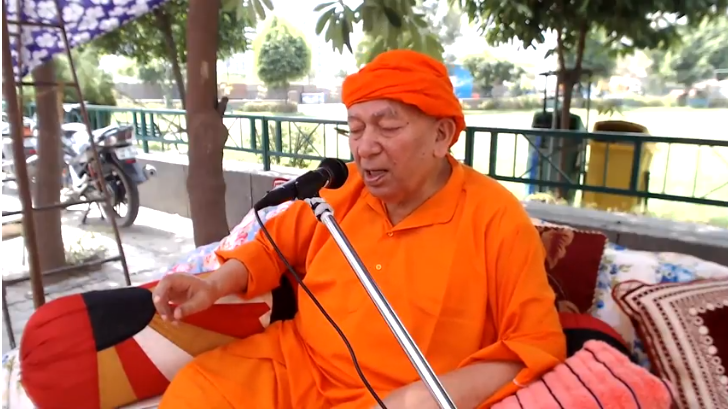
Attend the best deed as per Vedas
Yajyen
Schedule
Yajyen is performed daily in Ved Mandir. Public Yajyen is organised on every Sunday, Monday, Purnmasi and Amavasya. Additionally, it is organised on several occasions.
Annual Yajyen
Annual Yajyen is organised from April to June since 1979 with aahutis and discourse from every mantra of Vedas. It is done personally by Swami Ram Swarupji.
Please follow for regular updates
Visit Ved Mandir’s official YouTube Channel for Live Streaming of Yajyen, bhajans and other content
Updates
The channel is updated regularly.
More Content
More content is being added
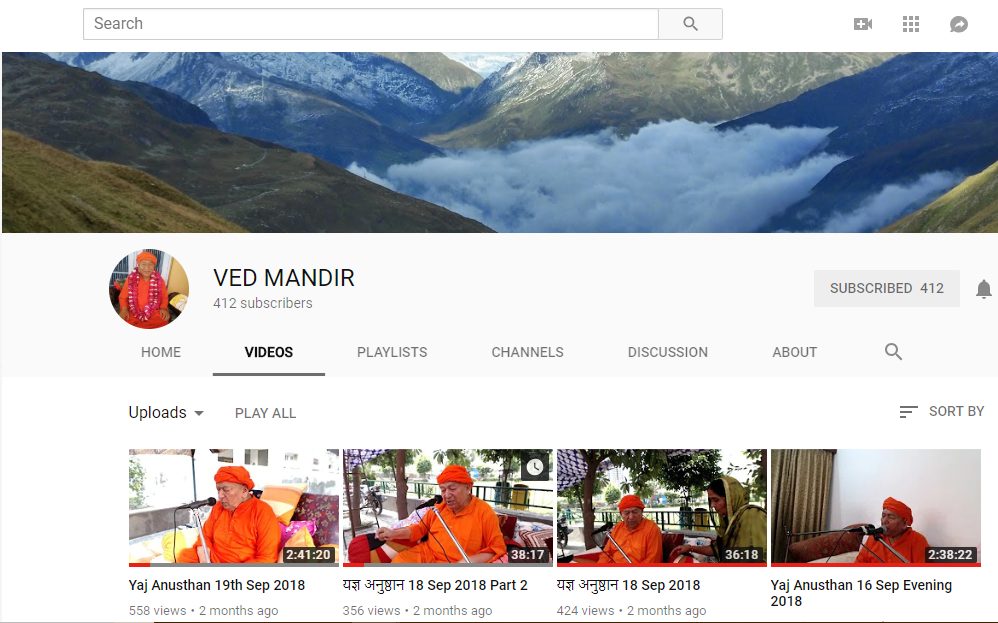
Please follow for regular updates
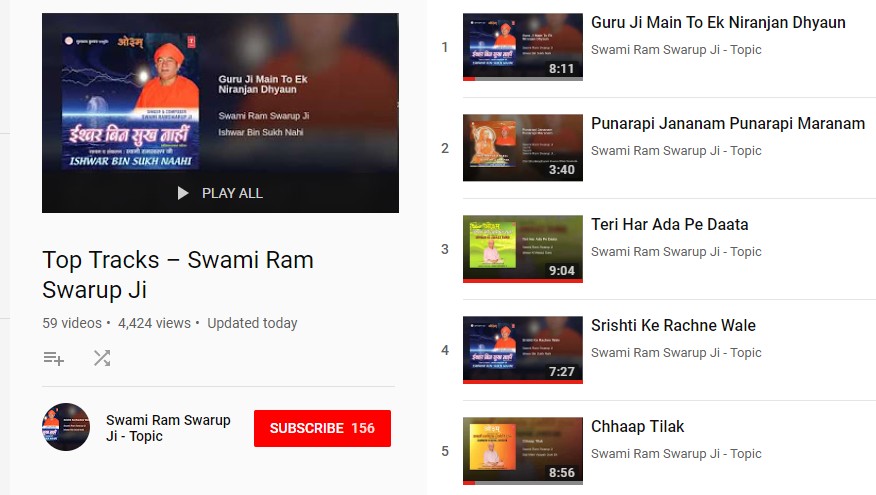
Visit Swami Ram Swarup’s BHAJANS on YOUTUBE for high quality bhajans
Updates
The channel is updated regularly.
More Content
More content is being added
Publications by Swami Ram Swarupji
Vedic Books
Swamiji’s publications are available in Hindi, English, Sanskrit, Tamil, Telugu, Kannada, Gujarati, Marathi and other languages. These includes books and audio.
Geeta
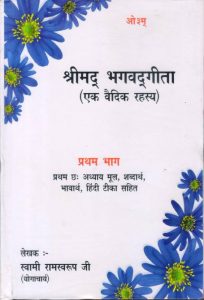
Shrimad Bhagwadgeeta ek Vedic rahasya has explanation of each shloka of Geeta with the reference of Vedas.
Vedon se mrityu rahasye jaano
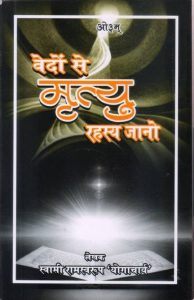
Vedon se Mrityu Rahasya Jano contains knowledge about death from Vedas, which is a bitter but fundamental truth.
Vedic Pravachan Sangrah
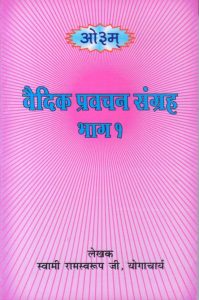
It has compilation of some basic knowledge of Vedas such has Maths, Science and others. It is a must read book. (2 Volumes)